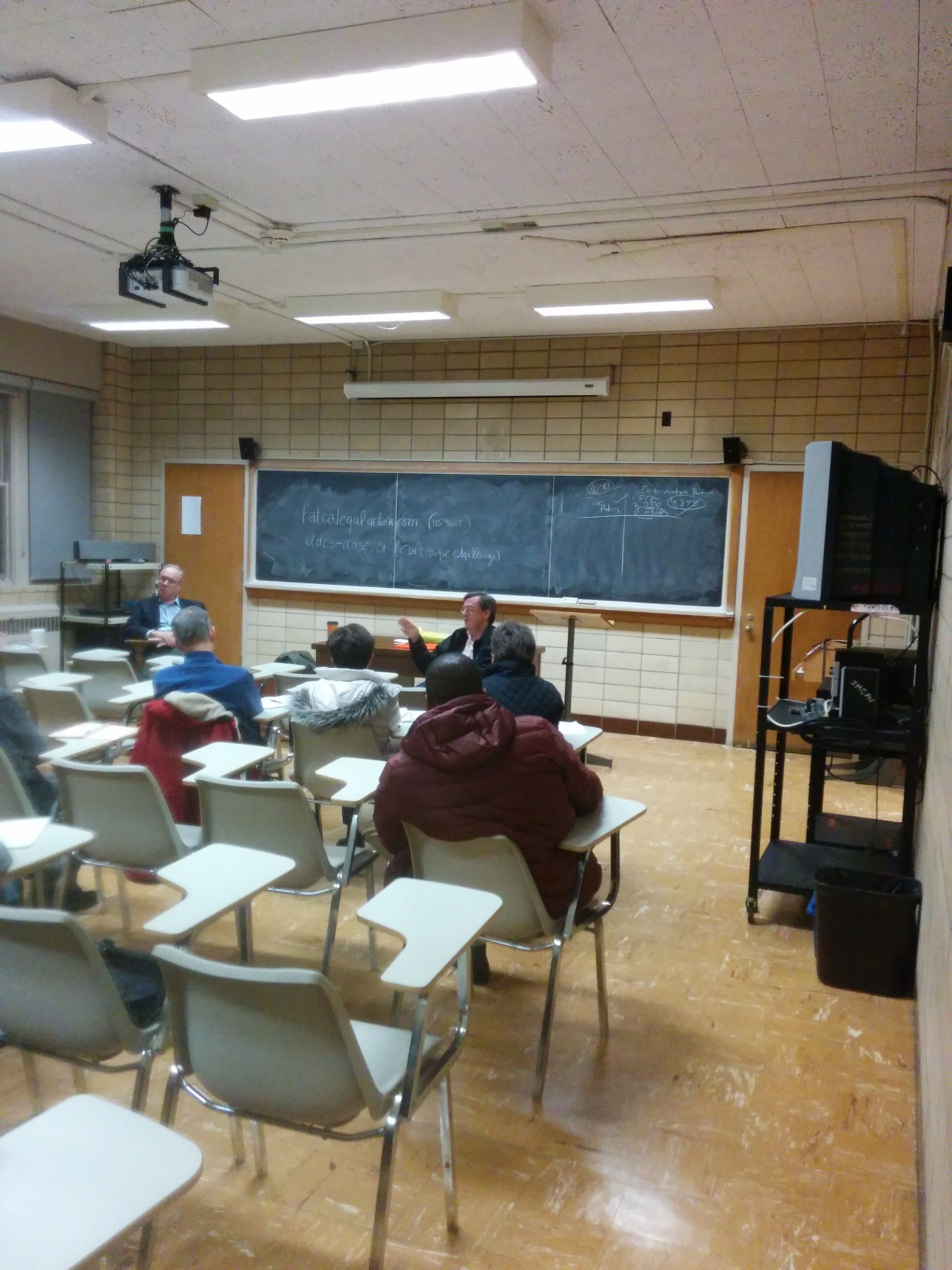
This session was very relaxed and consisted mostly of Questions and Answers. There were a variety of “U.S.Person-types” – An older gentleman who was a border baby (literally spent days in the US) and only recently found out about his “obligations.” He was certain there just had to be an “exemption” for someone in his situation. Clearly in the midst of a long “OMG” moment. A middle-aged woman born in the US while her Canadian father was stationed at a base there. A couple (who it turns out I knew from years ago when our kids were in kindergarten together; we NEVER would have imagined meeting again under these circumstances) who came in the early 70’s long ago relinquished yet had received a 1099 from a CDN banking institution. Some people already compliant but unsure how to proceed.
A recurrent theme in the answers given was to “prioritize the stuff you can control.” A lot of discussion about whether or not it was worth it to allow this situation to run one’s life. Make a decision, act and move on. In some ways, this meeting more than others I have attended was more like a therapy session.
Phil gave a brief outline of this began back in 2008/09 with the issues of Swiss banks, etc.
There are still some cases from 2009 that are just clearing. (!) The reality is there are HNWI’s who are doing Quiet Disclosures who likely have prison problems, as well as money problems. Importance of establishing a good “reasonable cause case if choice is QD. OVDP/OVDI programs are great deals for those who would otherwise, owe much more if they were penalized in the standard way. It was clarified that the in-lieu of FBAR penalty, was one penalty per year, end of story. Not per account per violation per year. If one’s net worth is under a million dollars, there is no need to fear audits, penalties, etc.
Concerns about the exit tax if applicable. Big problems since pensions are deemed paid out in full. Including RRSP’s. This can trigger “bad tax stuff.” Exemption for $680,000 worth of capital gains. It was stated that generally, if the net worth is 7 million or less, there are ways to engineer a way out of some of the problems involved. One person wondered if it were worth it to renounce, get a TIN/SIN, file once and just let it go (equivalent of conceding “covered “ status). You make decisions you can live with. Important to follow the law. Know what the law is. Part of the problem is the industry and even the government departments tend to determine procedures which may not necessarily be the law.
Discussion of the badly-drafted 4079. Originally intended to determine that one had not lost US citizenship and now being used for the opposite purpose. The original intent of the questions: “Have you ever worked for a foreign government?” What they were aiming for was “were you a general in a foreign army” or “were you the president of another country?” Nothing like the lengths to which this question is being taken. (understandably, since it is badly-drafted).
For past relinquishments – one should not take the position one is American. Stick firmly to this. Bank employees unlikely to know much about citizenship issues. There was never a requirement then, to obtain a CLN. RBC is apparently a big problem right now.
Being rich or needing to remain American for employment situations are about the only reasons where there is a good point to keep USC. No indication of difficulties crossing the border, so not a reason to retain.
Presenter: John Richardson, B.A., L.L.B., J.D., is a Toronto lawyer and a member of the Ontario Bar. Citizenshipsolutions.ca
When: Sunday, November 30, 2014, 6:30 – 8:30 pm
Where:Carr Hall, St. Michael’s College, U of T, 100 St. Joseph St., Toronto ON M5S 2C4
MAP
Admission: $20 individual or $40 for a family of up to four people. Payable in cash at the door, please (to cover costs). Hope to see you and your families on November 30. Spread the word!
This session will feature a very special guest speaker!