A new idea for FATCA reform has been suggested, and discussed by Democrats Abroad. Brockers might like to discuss it also. Is this a workable solution or just another complex piece of patchwork?
Category Archives: Issues regarding US persons abroad
Important: New Effort to Seek Input on Bipartisan Tax Reform : Input needed
For those that are in the position for reform, it is important to again submit input to Congress.
Remember that the last efforts have put us on the radar and placed RBT as a logical solution.
Some of us are tired. We should all know that any input is helpful. One can send in the previous submission or simply send in a few lines.
Or, send in a larger and more researched article. It’s all up to you.
Or, send in a pre-formatted letter such as AARO has recommended.
https://aaro.org/images/model_letter_def.docx
Hatch, Wyden Launch New Effort to Seek Input on Bipartisan Tax Reform
http://www.finance.senate.gov/newsroom/chairman/release/?id=3bcf1fcf-9dd8-47d4-9202-21a0870cd8d6
Stakeholders and the Public Asked to Submit Ideas to Working Groups
WASHINGTON – Finance Committee Chairman Orrin Hatch (R-Utah) and Ranking Member Ron Wyden (D-Ore.) today announced a bipartisan effort to begin soliciting ideas from interested members of the public and stakeholders on how best to overhaul the nation’s broken tax code to make it simpler, fairer, and more efficient. The goal of this effort is to provide additional input, data, and information to the Committee’s bipartisan tax working groups, which are currently analyzing existing tax law and examining policy trade-offs and available reform options within each group’s designated area.
“By opening up our bipartisan working groups to public input, we hope to gain a greater understanding of how tax policy affects individuals, businesses, and civic groups across our nation,” Hatch and Wyden said. “In doing so, we will also equip our working groups with valuable input, and we hope these suggestions will help guide the groups through the arduous task of putting forth substantive ideas to reform the tax code in each of their areas.”
Individuals, businesses, organizations, and advocacy groups interested in submitting comments should send an email to the below bipartisan group or groups that relates to their area of interest. Please send submissions to each group of jurisdiction if an interest area covers more than one group.
Individual Income Tax – Individual@finance.senate.gov
Business Income Tax – Business@finance.senate.gov
Savings & Investment – Savings@finance.senate.gov
International Tax – International@finance.senate.gov
Community Development & Infrastructure – CommunityDevelopment@finance.senate.gov
Additional Submission Requirements:
- All submissions must be submitted as a pdf attachment. The attachment should be saved using the name of the organization/individual submitting the recommendations.
- Parties should list the name of the tax working group they wish to contact in the subject line of the email.
- Please include contact name, organization (if the submission is being submitted on behalf of a group), phone number, and email address, in the body of the email.
- Submissions will be accepted through April 15, 2015, and made public at a later date.
- If the above directions are not followed, the Committee reserves the right to not include the submission.
- If technical problems are incurred, parties can contact the Committee at 202-224-4515.
Each of the five bipartisan working groups is currently working to produce findings on current tax policy and legislative recommendations within its area, with the goal of having recommendations from each of the five working groups completed by the end of May. Submissions from stakeholders will be reviewed by the working groups and ideas can be incorporated into the each working group’s final recommendations. The five working group recommendations will be delivered to Chairman Hatch and Ranking Member Wyden, and will be considered in developing bipartisan tax reform legislation.
Drumming-up FATCA business in the Caymans
A new video advertorial from CNS Business in the Cayman Islands takes us to the retail front line of the rapidly-metastasizing FATCA compliance industry and shows us how it’s done. A good-sized group of prospects Cayman-based US Persons were invited to a free seminar last week at the Caribbean Club entitled “Navigating US Tax Requirements and Strategic Methods of Coming into Compliance”. Attorneys from Caplin & Drysdale, a DC-based law firm specializing in “the tax controversy area” co-hosted the event with Ham, Langston & Brezina LLP, a multi-service accounting firm based in Texas.
As the story reports:
“There’s no longer the option of ‘I reside in this small island country – no one will find me’
Right now the message I deliver is FATCA is changing all of that and just because you’ve had an account here for 20 or 30 years without issues doesn’t mean you won’t get a letter in the mail. We’ve had clients in Cayman, as well as a host of other countries, receiving these letters,” stated [Caplin & Drysdale attorney, Dianne Mehany].
“It’s becoming harder and harder to hide and you really want to be ahead of the situation. You don’t want the IRS knocking on your door. There are options for you to come forward and come into compliance now before they come to you because once they come to you, it’s a very different conversation,” added Caplin & Drysdale attorney, Zhanna Ziering.
Both attorneys explained they are not trying to scare anyone, but want them to understand there are criminal and civil penalties if you don’t come into compliance.
Heady days indeed for FATCA compliance firms – their oyster truly is the entire world.
Of course, others are not so enthusiastic about the kind of help these firms are pitching. Comments are open and here was the first one:
Just disgusting that our government should be aiding and abetting these greedy parasites. Especially when you remember that many of the “Americans” living here are American only as a matter of law. They were born in the USA to Caymanian parents and have never lived or worked in the States.
And the beat goes on…
Agency capture in Mordor, the most corrupt capital in the world
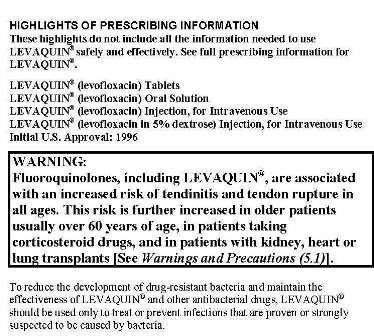
Since relinquishing my US citizenship in 2011 and shedding the most toxic aspect of my life here in Canada, I now worry about another kind of toxicity. Let me explain: For about ten years I’ve dealt with two nagging and debilitating conditions: peripheral neuropathy and tendinopathy. It came to a head in November 2012 when Cathy asked me to put some carriage lights up on our garage and I twice fell off the ladder, missing the last rung and falling on my butt, and I also missed a step on the way to the garage and fell on my face. This was the result of the growing issue of peripheral neuropathy–not able to tell where my feet were causes loss of proprioception. So I went on a low carb high fat diet (LCHF) and lost 40 lbs, and most of the neuropathy went away. But then in the Fall of 2013, I started having the relapses of tendinopathy which were worse than anything I’d had before–quadriceps, achilles, IT bands, rotator cuffs, neck, toe, elbow tendons–even today, I’ve had to use crutches since last Wednesday and medicate myself (ibuprofen) for throbbing pain in my right foot. This has caused me to cancel an academic trip to Switzerland planned for next week.
I
n October 2013 I was searching for a dietary solution to my tendon problems and I learned that Cipro, an antibiotic in a class called fluoroquinolones (FQs) is the likely culprit of both my tendinopathy and my neuropathy, as well as several other problems (dysbiosis, weight gain, etc.). In 2008, the year after I stopped my last dosage, the FDA issued a black box warning for tendinitis and tendon rupture for Cipro. I now belong to a group of people called “Floxies” because FQs (Levaquin, Cipro, Avelox, etc.) all have the stem “flox” in their scientific name. On Facebook there is Fluoroquinolone Toxicity Group with over 3000 members, many of whom are suffering much worse than me. Despite these problems, Cipro and other FQs remain a very well-prescribed drugs as doctors hand them out as though they were candy for sinus infections, traveler’s diarrhea, and other common ailments, when FQs should only be used for life-threatening bacterial infections when other antibiotics have failed.
Agency Capture
First Plantiff in Bopp Case Named
I once got trapped in enemy minefield w/ no good choices -getting hit w/ #FATCA felt like that says Bopp plaintiff http://t.co/8TauWmjamr
— ADCSovereignty (@ADCSovereignty) March 11, 2015
US Army major in 1st Iraq War = plaintiff in Bopp suit-forced 2 choose:: USC or arduous penalties http://t.co/6WYdc16xQ7 #FATCAMarriage
— Patricia Moon (@nobledreamer16) March 11, 2015
Rand Paul pushes repeal of #FATCA despised by Americans living abroad http://t.co/RxZ5kCSvhG via @washtimes Plaintiff in Bopp suit named
— ADCSovereignty (@ADCSovereignty) March 11, 2015
“Introducing Major (ret.) Roger Johnson: Major Johnson is the first Republicans Overseas FATCA lawsuit plaintiff and RO Worldwide Vice President for Eastern Europe. He served in the First Gulf War and received a Bronze Star for valor. As a combat veteran, he wrote a blank check made payable to “The United States of America” for an amount of “up to and including his life.” Now he is fighting for all expats’ constitutional protections and the pursuit of happiness.“
FatcaFantastic! What a great choice! Can hardly imagine the American public dissing him as a traitor or tax cheat.
The Real Risk
Phil Hodgen stands high among the few tax/law “professionals” in the U.S. expatriation sector that I have respect for. Hodgen has just shared this precious pearl:
The real risk is uncertainty and fear.
If you wish, go on to read the whole classic answer that is distilled into this pure nacre.
The coda, also a quotation: In the long run everyone pays the price. Sauve qui peut.
A Young #Americanabroad Has a Fantastic Reply to the Young Turks
I am sure a lot of Brockers will remember how horrifying it was to listen to this video referred to in this post. I remember thinking it couldn’t possibly be real and assumed at first, that it was a spoof. It was really that bad.
FATCA Citizenship Taxation https://t.co/ZLnXRhBwHs – excellent discussion by one of those #Americansabroad
— U.S. Citizen Abroad (@USCitizenAbroad) March 9, 2015
The above tweet links to a video made by a young man studying in Germany who apparently has heard the Turks and this is his response. He obviously has a much better grip on the facts. Interesting to see a young person’s reaction to this dilemma. Worth a listen.
MoveOn using partisanship to begin implementaion of Logan Act
With only short-term memory, you can recall that Eric warned us about the danger of old laws (such as CBT or FBAR) lying on the books: “Reed Amendment, Logan Act: why worry about unenforced & unenforceable laws? ”
Do you remember laughing at Ronald Reagan, when he said: “Freedom is never more than one generation away from extinction” I do.
And I remember having some thoughts of dismissing Eric’s article, too. (although those only lasted about 0.25 seconds)
Well, all it takes is a little sheeple-driven bipartisan politics to make it happen, and now it is happening.
http://petitions.moveon.org/sign/impeach-and-prosecute-1.fb47?source=s.fb&r_by=12648917
It’s objective is for one side of the political spectrum to go after the other side of the political spectrum.
However, the Logan Act is not directed at political leaders, it is directed at guys like Logan himself, who is pretty much like you or me or any of the organizers of the citizens abroad groups.
There is no better way to spread propaganda, than to have propaganda spread itself. A petition such as this can come at any time and enforcement of the Logan act could begin at sunrise of any day.
Just look at your own facebook page and see how many times you have seen this petition. I’ve seen it twice so far. It has 42,078 signatures so far.
A mirror petition is now up on Whitehouse.gov
https://petitions.whitehouse.gov/petition/prosecute-john-boehner-violation-logan-act/phgwC0r0
All it takes is a little hate (of one party or the other) to have laws like the Logan Act enacted.
Financial Post hits a new low in FATCA reporting
In a new “Special to the Financial Post” advertorial that makes Barrie McKenna look like Woodward and Bernstein, über compliance condor Max Reed attempts to reassure “American citizens in Canada” that they have nothing to fear, except perhaps some red-herring nightmare of IRS goon squads swarming across the border to seize their homes. It is a tour de force of utter nonsense and, sadly, another disheartening example of what now passes for journalism in Canada. Here are a few tidbits, displaying all the comforting factuality of a PMO press release:
Don’t panic, American citizens in Canada: The IRS is not coming to seize your house
To get on the IRS’s good side, take advantage of the amnesty program called “Streamlined Foreign Offshore Procedures” (which you can find on the IRS site). It will help you catch up on overdue tax returns without fear of penalties.
U.S. citizens in Canada are only subject to U.S. federal tax. (The Canadian taxes you pay are credited against your U.S. taxes.)
Unless you have U.S. source income, you will not owe anything.
The deadline for filing a return in the U.S. is April 15, but can be extended to June 15 for those outside the U.S.
Intriguingly, this is just part one of a spring series of helpful articles for “One million American citizens in Canada.” It is difficult to imagine just how much more useful advice Max Reed can offer than he does in his first instalment.
Comments are wide open.
Green Card Holders and FATCA
If you have information about how FATCA will affect green card holders in your country, or a question about FATCA and your green card status, or an experience to share, please comment here.
The idea for this thread comes from News, who posted the following FAQ from Canada Revenue Agency’s website, regarding FATCA and Green Card Holders, as a comment on the “Terminating a Green Card” thread.
“I hold a U.S. green card. How does this affect my tax residency?
If you are a green card holder (that is, a lawful permanent resident of the U.S.), the U.S. considers you to be a U.S. resident.
However, if you are a resident of Canada for tax purposes and do not hold U.S. citizenship, you should not identify yourself as a U.S. person to your Canadian financial institution.”