
In addition the meeting mentioned below, we would like to have a second, more informal program for expats and their families and friends. This format would be a more intimate question and answer which will be focused on individuals subject to the CBT regime. This would take place on Sunday, August 12, from 2:00 – 4:00 pm on the U of T campus. We need a confirmed number of individuals before booking a room. If you are interested, please email nobledreamer16 at gmail dot com Cost: $20


A LIGHT AT THE END OF THE TUNNEL OR ANOTHER ONCOMING TRAIN: THE POSSIBLE END OF U.S. CITIZENSHIP-BASED TAXATION
If you are an American citizen residing and doing business in Canada, you bear the pain of the heavy tax burden endured by all U.S. citizens due to the fact that the U.S. is the only major country that imposes worldwide taxation on its citizens no matter whether they live in the U.S. or in another country. In addition, the U.S. imposes significant penalty laden reporting requirements on U.S. citizens living in Canada and abroad.
Change is a possibility.
Did you know that there is a possibility that the U.S. Congress may introduce, debate and vote upon a bill that may ease this worldwide taxation burden on U.S. citizens living and working in Canada? This bill would enact ‘Territorial Taxation for Individuals (TTFI)’. It is a tax cut for 9 million overseas Americans by ending double taxation.
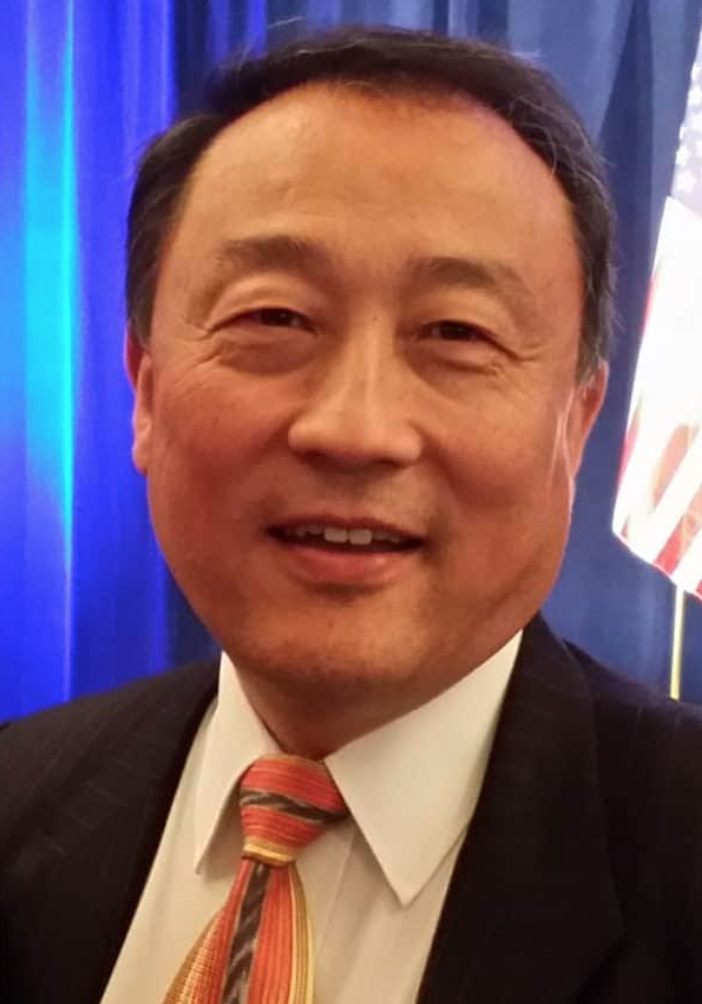 Solomon Yue, CEO of Republicans Overseas has been involved with drafting the TTFI bill. Mr. Yue, who is currently working with AmChams throughout the world, will present publicly shareable information about the TTFI bill, and discuss its progress as it journeys through the legislative process. He will be encouraging AmCham Canada to lend its support in the global effort to encourage Congress to move forward with this legislation.

Elena Hanson, Managing Director of Hanson Crossborder Tax Inc. and a member of Democrats Abroad. Elena will be speaking on the logistics and burden of U.S. tax filing obligations as an American in Canada.
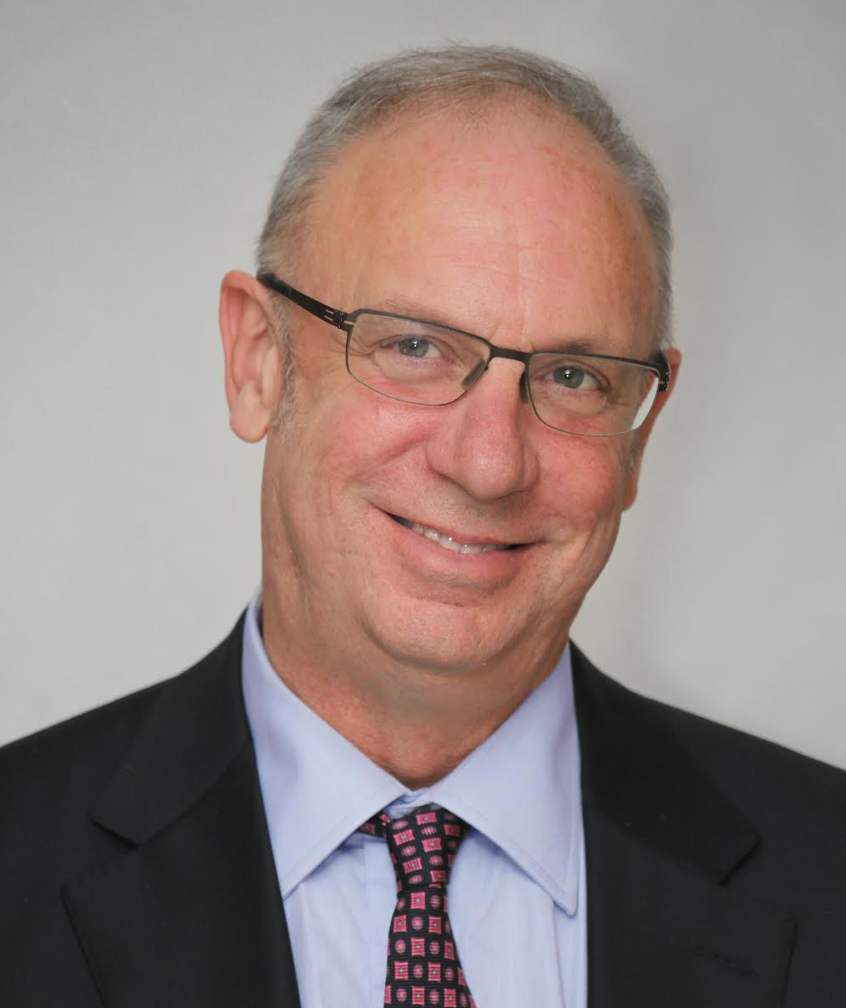 John Richardson, a Toronto Lawyer of Citizenship Solutions, will also be joining Elena and Solomon to speak on the lost opportunity cost of being a dual U.S.-Canadian tax filer: Canadian residents who are subject to the U.S. tax system do not have the same financial planning and other opportunities that non-U.S. citizens have.
Date: Thursday, August 16, 2018
Time: 6:15pm to 9:00pm
Place: St. Michael’s College, Alumni Hall, Room 400; 121 St. Joseph Street, Toronto (paid parking near building; nearest subway station is Museum) MAP
Cost: $20 +tax (AmCham members); $35 +tax (non-members).
Pre-registration is required. Registrations due August 13.
Register
Solomon Yue inarticulated on 17 July:
“House W&M Cmte Chairman talks to POTUS about this year’s tax reform package 2.0. #TTFI is 1 of 4 bills in the package: making individual income tax cuts permanent 4 10 yrs, increasing child tax credit, further lowering corporate tax rate 2 20%, & ending double taxation.”
(https://mobile.twitter.com/SolomonYue/status/1019339310271787009)
But then Bloomberg said on the 24th:
https://www.bloomberg.com/news/articles/2018-07-24/tax-cut-2-0-draft-said-to-omit-fixes-for-retail-metoo-victims
And now Solomon Yue, instead of talking confidently about Brady discussing the end of CBT with Trump, is talking about encouraging AmCham Canada to encourage Congress to move forward with the legislation.
Did it get dumped from the package or was it never seriously intended to be in the package?
@Plaxy
Not sure exactly what your comment is inarticulating or what the purpose of it is.
1. You are reading a description from AMCHAM that is in a flyer. The contents of the flyer were not written by Solomon Yue. The description of his efforts may or may not be accurate.
2. At the end of the day – no matter what road leads there – it would be Congress that make any change in the law (assuming that you believe that a law is required to change CBT and that it cannot be changed by regulation).
3. Even if points one and two were not true, there is no incompatibility whatsover between change being considered/initiated by different parts of the U.S. Government.
The point I’m making is that TTFI was said to be one of four bills making up the 2.0 package but Brady has told Bloomberg that there are three bills in the package; TTFI is not included.
“there is no incompatibility whatsover between change being considered/initiated by different parts of the U.S. Government.”
Sorry, I don’t know what you’re referring to.
I so wish I could be at these programs. Glad they’re happening, though, and I hope that someone will give us a report later in August.
Eritrea is the only other country where taxation is based on citizenship.
I hope this possible change is not just for Americans living in Canada but anywhere in the world.
I would also like to point out one other civil rights problem Americans and other non-citizens of New Zealand is suffering from. I am currently living in New Zealand sharing my life with a New Zealand Citizen. Because I am receiving Social Security from the U.S. my de facto partner’s superannuation (social security) from New Zealand has been cancelled. This law is section 70 of the Ministry of Social Development and affects any New Zealander who lives with a partner who is receiving social security from another country. The funds for superannuation comes from general taxation. This is one reason New Zealand taxes are higher than what you see in the U.S. The US Ambassador does not seem to become involved with it. This law is not well known to citizens of New Zealand nor by anyone else living in New Zealand. Even though the US Social Security is funded by the employee and his/her employer, this does not seem to make any difference. I would like to see this publicized all over.
@ Keiko,
Welcome to Brock and thanks for sharing this information.
We have several country-specific threads. Would you like to post your comment about social security on our country-specific thread for New Zealand, as more New Zealanders are likely to see it there.
That is shockingly unfair.
I hope NZers will be able to challenge such an unjust law and bring about a change.
“Because I am receiving Social Security from the U.S. my de facto partner’s superannuation (social security) from New Zealand has been cancelled. This law is section 70 of the Ministry of Social Development and affects any New Zealander who lives with a partner who is receiving social security from another country.”
So if Zimbabwe decides to pay 1 Zimbabwe dollar of social security to every person who lives in every country that has a Z in its name, two New Zealand citizens who live in New Zealand will both lose their superannuation because each one’s partner will receive 1 Zimbabwe dollar of social security.
It was unimaginable that a country could create such an abomination for itself without help from the US, but NZ did this to its own citizens.
@Keiko Pulin writes
This description does NOT appear to be consistent with either the law to which you refer or the New Zealand Government explanation. There is no “cancellation”. But there is a “dollar for dollar” reduction of the amount that the partner receives. In other words, the “entitlement” to Superannuation is NOT affected. The amount that is paid is affected.
The purpose of the New Zealand Superannuation is NOT to simply pay people money. The purpose is to ensure that all individuals and family units have a base (very base) level of income. Once that level of income has been achieved, there appears to be a reduction in payments that might otherwise paid.
Before jumping to the conclusion that this is unfair or discriminatory you should read the information from the New Zealand Government which is found here:
https://www.workandincome.govt.nz/pensions/travelling-or-moving/moving-to-nz/overseas-pensions-deduction-examples.html#null
and the “S. 70” to which is referred:
http://www.legislation.govt.nz/act/public/1964/0136/latest/DLM363550.html
What the Government says is this:
The purpose of this is to achieve a result where everybody receives a pension up to a maximum. Once that maximum has been realized the Government will not pay out any additional money. In other words, the New Zealand Superannuation is like Canada’s “means test system” which includes “clawbacks”.
Is this really unfair?
Not unfair to the person who is receiving the foreign pension. It’s unfair to the NZer who is not receiving the foreign pension.
Based presumably on a remnant of the common law of the former colonial power – treating all household income as belonging to one member of the household.
“If your partner only has an overseas pension and you get NZ Super or a Veteran’s Pension
The amount they receive from their overseas pension is deducted in full from your NZ Super or Veteran’s Pension payments.”
https://www.govt.nz/browse/tax-benefits-and-finance/new-zealand-superannuation-and-the-veterans-pension/nz-superannuation-veterans-pension-and-overseas-pensions/
Crass injustice (albeit off-topic for this forum)
Redefine “partner” as “roommate” might be one approach.
I see this as a good move by Solomon Yue to engage with Amcham Canada. One would think the Amcham (of a country with ~ 1 million US Persons) would be active in trying to roll back citizenship based taxation. I have not seen them tweet about it. Yet this event is very prominent on their web homepage: http://www.amchamcanada.ca/ Bravo!
While Solomon Yue did tweet a letter showing multitudes of Amchams of the Pacific supporting TTFI (https://twitter.com/SolomonYue/status/997680970630287360 ), my impression is that, generally, they don’t care. I have one tweet by Amcham HK in support: https://twitter.com/AmChamHK/status/927475808217784321
I have been after Amcham Australia for years on Twitter. I have a video of their previous CEO talking about territoriality for individuals ( https://www.youtube.com/watch?v=bzH7DBGp-HM ). Yet really nothing else. IMO, they are just all about networking and don’t want to get involved with the U.S. double tax claim even though it impacts everyone overseas no matter their political stripes.
And one may think that especially with the transition tax and GILTI (and FATCA+FBAR of business accounts) that they would be leaders of a revolt.
I did a tweet for Amcham Canada for these events as they have not.
Please Retweet and Like: https://twitter.com/JCDoubleTaxed/status/1023731118435008512
This tweet is to the Canadian twitter string of 48 addresses:
Pls RT/Like:
https://twitter.com/JCDoubleTaxed/status/1023748801054433280
JC – “I see this as a good move by Solomon Yue to engage with Amcham Canada. One would think the Amcham (of a country with ~ 1 million US Persons) would be active in trying to roll back citizenship based taxation. I have not seen them tweet about it. Yet this event is very prominent on their web homepage: http://www.amchamcanada.ca/ Bravo!”
Isn’t it likely that the RO AmCham fundraising tour is simply aimed at wealthy Republican donors? Many will be members of AmCham.
Brady has told the press that there will be three bills in the 2.0 package; Solomon Yue says a TTFI bill will also be included. I suspect Brady’s count is more likely to be correct.
It seems the 2.0 package will have little chance of becoming law, in any case, without Democrat support.
Tax Reform 2.0 “Framework”
https://waysandmeansforms.house.gov/uploadedfiles/tax_reform_2.0_house_gop_listening_session_framework_.pdf
No mention of any bills designed to change tax requirements for expats.
@plaxy the wealthy may help fund lawsuits.
Amcham Canada out to highlight the wrongs of CBTax is better than it not doing so.
Solomon says on 26 July: #TTFI will be a stand-alone bill as one of four bills in the tax reform 2.0 package.
https://twitter.com/SolomonYue/status/1022686144427958272
“the wealthy may help fund lawsuits.”
The wealthy may help Republicans get re-elected.
“Solomon says on 26 July: #TTFI will be a stand-alone bill as one of four bills in the tax reform 2.0 package.”
And yet the Ways&Means “Framework” does not mention it.
@Plaxy says:
This is one of the most ridiculous statements every to grace Brock. It is clearly NOT an AmCham Fundraising Tour. It is a “tour” to achieve support for legislative change – specifically to exempt most Americans abroad from the “worldwide tax regime”. Kindly reference the part of the event description that says or implies it is a “fundraising tour”.
Plaxy, there are a small number of people in the world who are actually investing their time and effort to effect the change for the many. “Negativity” from the “many” – especially when the sole purpose appears to be to undermine the efforts of the few – is simply not helpful.
Fundraising for the Republican Party. That’s RO’s raison d’être
Hanging on, expecting the Republicans to fix things, without a shred of verifiable evidence that they can, will, or even intend to; and in the teeth of the evidence of their actual deeds; is just another waste of time.
https://twitter.com/SolomonYue/status/1022686144427958272?s=19
Yes, that’s already been quoted. But the “Framework” for the not-yet-extant 2.0 package mentions three possible categories for further tax cuts, not four. TTFI is not mentioned.
Not that it matters, given that any proposed measure would require Democrat support.
Interesting Forbes piece about this at https://www.forbes.com/sites/jeffreylevine/2018/07/26/tax-reform-2-0-and-how-the-gops-deal-with-the-devil-could-backfire/#701438082805
And another at https://www.marketwatch.com/story/what-tax-reform-20-could-look-like-2018-07-27
@Plaxy
Perhaps funding for the Republican party is the main focus of RO. There is nothing wrong with that. It also happens to be a fact that RO is engaged in trying to get TTFI and is anti-FATCA. While I have not been directly involved with RO, some of the people I work with closely, have been. I know there have been months and months of large weekly conference calls which have had nothing to do with funding the Republican party and totally to do with the FATCA lawsuit and TTFI. A lot of hard work has gone into this. People pay out of their own pockets for trips to Washington to meet for the FATCA hearing, the meetings with Grover Norquist etc. It seems as if you are determined to discredit their efforts. There are always difficulties and misunderstandings that occur whenever any group of people try to work together. Few outside of the expat world have shown any support for our situation. We have to work with/accept the support of those who come forward and we also have stop expecting some perfect result from them whether it is their motivation, how they go about it, or what the result will be.
If you look very closely at the AmCham site, you will see that that actual event is not sponsored by them. Groups with possible populations of similarly-affected people have been aporoached by members of the expat community (not the other way around). Assuming anything about AmCham in this situation is simply based on some previous idea or perception.
While Brock was created to protect expats from wrong information coming from the government and compliance community, it also resulted in a grassroots movement based upon action. To hear rather constant criticism, doubt and suspicion of those who are engaged in trying to help us is actually counterproductive not just to the efforts being exerted but to the purpose of Brock itself. Please make sure you are fully conversant with all the facts before you pronounce what is a waste of time. It really amounts to an assault on the expats engaged in the work and affects them a great deal. It really does hurt them on a personal level.
@plaxy
Some of us may have no other choice than to “waste” our time.
It would be nice to show some support for even the shred of possibility that RO will accomplish what they say they hope to do. If not, you can be the first to say “told you so”. In the meantime, hope is keeping many from jumping off a bridge. Tread lightly.